|
| ||||||||||||||||||||||

 | ||||||||||||||||||||||
| December 25, 2004 | | ADVERTISE | ABOUT US | FEEDBACK | | |||||||||||||||||||||
|
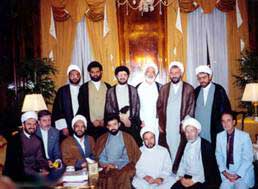
Scholars in North America condemn Jordan king remarks By: Mohamed Ali NEW YORK: Council of Shia Muslim Scholars in North America has severely condemned remarks of King Abdullah II of Jordan regarding Shias in Iraq. In an interview to The Washington Post published 8 December, king Abdullah II said creation of an Islamic government in Iraq would dramatically shift the geopolitical balance between Shia and Sunni Muslims in the Middle East. Abdullah said the formation of a new Shia crescent would particularly destabilize Gulf countries with Shia populations. “Even Saudi Arabia is not immune from this. It would be a major problem. And then that would propel the possibility of a Shia-Sunni conflict even more, as you're taking it out of the borders of Iraq,” the king said. In a statement, the Council in North America said that in such a time when Islamic world is passing through a critical stage and crisis the comments of Jordan’s monarch shocked every one. He warned US administration against Shia crescent saying that it would shift the geopolitical balance between Shia and Sunni Muslims in the region, as if the balance in the sight of Jordan king is not achieved except by oppressing the followers of Ahlul Bayt Ar-Rasul (progeny of holy Prophet, Pbuh&hp), putting them in jails and mass graves, and massacre of their cream, ulema, intellectuals and sidelining them. The council further said that earlier Saudi Foreign Minister Saud Al-Faysal demanded at Sharm Ash-Sheikh conference that Sunnis must not be sidelined in Iraq, in a time when the Saudi government itself is committing discrimination against people of other religions. This flat interference created concern in Islamic Ummah, and these statements are aimed at creating rift among Shias and Sunnis who have been living together with love since centuries, the American Ulema said. The council hoped that all Muslim scholars, OIC and international conference for Muslim scholars and thinkers would play their role in stopping such kind of remarks that are aimed at creating split in Muslim unity and relationship and fanning biases. END |
| ||||||||||||||||||||