|
Saudi vote: Shiias, long kept down, hope to get rights
By: Abdulali
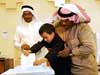
AL-QATIF, Saudi Arabia: Saudi Shiias
cast their ballots on Thursday in the second stage of unprecedented
municipal elections with a surge of enthusiasm among them which has
alarmed some extremists.
The Saudi Shiias, who have long complained of discrimination, believe
the elections will give them a voice and official channels to
communicate grievances in the country.
One candidate, Jaafar Ash-Shayeb, said the US-led war in Iraq and
subsequent elections there had helped in "loosening up the situation"
for Shiias in Saudi Arabia.
Most Shiia political prisoners have been released, travel bans lifted
and exiles allowed to come home. Adhan, or the Calls to Prayer, can
now mention Imam Ali (p)'s name. A ban on the Shiia practice of
tatbeer, or cutting head with swords, to demonstrate grief over the
unjust slaughter of grandson of holy Prophet (p) Al-Imam Al-Hussein
(p) also has been lifted. A throng of young men performed this ritual
no one can remember seeing here in public - beating their scalps with
swords until they drew blood to mirror Al-Imam Al-Hussein (p)'s
suffering.
Husseini mourners in this kingdom once marked Ashura in darkened,
illegal community centers out of fear of stirring the powerful wrath
of the religious establishment.
But this year Ashura fell on the eve of the 10-day campaign for
municipal council elections and a bolder mood was readily apparent.
Thousands thronged sprawling, sandy lots for hours to watch warriors
on horseback re-enact the battlefield decapitation of Al-Imam
Al-Hussein (p), in 680.
But Ash-Shayeb and others note these changes have not been formalized
and say that without regulations banning discrimination against them,
Shiias will still be treated as second-class citizens.
Other restrictions remain: Shiias cannot teach religious studies or
hold sensitive government, security, school or hospital positions.
Shiia publications are banned. School children are taught Shiias are
deviants. There has been no Shiia cabinet minister, and only one Shiia
ambassador - to Iran. There are no Shiia mayors or police chiefs, and
not one of the 300 Shiia girls' schools in the Eastern Province has a
Shiia principal.
Saudi Shiias believed that the government would at least start to
regard them as citizens, especially after Crown Prince Abdullah met
nearly two years ago with a group that presented a petition for equal
rights, titled "Partners in the Nation."
Voting was held Thursday in Eastern Province, where the country's 3
million to 4 million Shiias are concentrated and which contains the
country's richest oil fields but is less developed than other regions,
and in also four regions of the south.
In their sermons, Shiia clergymen urged men to vote, saying they
should not isolate themselves from others in the nation of 20 million
people.
Some Shiia women, barred from voting like all Saudi women, called on
mothers, sisters and daughters to encourage male relatives to take
advantage of the opportunity for a say in decision-making in this
absolute monarchy.
The electoral success of Iraq's long-suppressed Shiia community across
the border added to Saudi Shiias' enthusiasm.
|
|
 |
| |
"Knowledge is
better than wealth because it protects you while you have to
guard wealth. it decreases if you keep on spending it but the
more you make use of knowledge ,the more it increases . what you
get through wealth disappears as soon as wealth disappears but
what you achieve through knowledge will remain even after you."MORE
..

|
|
|
|
|
|
|