|
US report on human rights problems for Shiites in Gulf States
By: Mohamed Ali
WASHINGTON, United States: The US State Department
assessed the situation of Shiites in five Gulf nations in 2005, as it
appeared in "Country Reports on Human Rights Practices," released
Tuesday.
The following is the assessment:
Bahrain: The government rarely interferes with what it considers
legitimate religious observances. The government permitted public
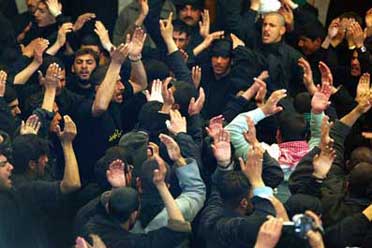
religious events, most notably the large annual two-day Ashoura, but
police closely monitored these gatherings.
However, discrimination against the Shiite population 70 percent of
the 450,000 Bahraini citizens remains a problem. Non-Shiites receive
preference for employment in sensitive government positions and in the
managerial ranks of the civil service.
Kuwait: The Shiites 287,000 or 30 percent of the 1 million local
population remain disadvantaged in the provision of mosques, access to
Shiite religious education and representation in higher levels of the
government. The government allows Shiites to follow their own
jurisprudence in matters of personal status and family law at the
first instance and appellate levels.
Shiites are free to worship without government interference, and the
overall situation for Shiites improved somewhat during the year.
Qatar: The state religion is Islam. Both Sunni and Shiite Muslims
practice freely.
Shiites organize traditional ceremonies and perform rites such as
beating their heads and backs with swords and knives in their own
mosques. They are permitted to build and decorate Shiite mosques
without restrictions.
Shiites are also well represented in the bureaucracy and business
community, according to the report.
Saudi Arabia: The government continues to discriminate and commit
abuses against Shiite. Government security forces, mostly religious
police, reportedly arrested Shiites based on scant suspicion, held
them in custody for lengthy periods and then released them without
explanation. Shiites are subjected to officially sanctioned
discrimination of various forms.
United Arab Emirates: The Shiite community was free to worship and
maintain its own mosques. A committee of the Ministry of Justice,
Islamic Affairs, and Endowments drafts and distributes all Friday
sermons to Sunni and Shiite imams. The government monitors all sermons
for political content, reports the AP.
|
|
 |
| |
"Knowledge is
better than wealth because it protects you while you have to
guard wealth. it decreases if you keep on spending it but the
more you make use of knowledge ,the more it increases . what you
get through wealth disappears as soon as wealth disappears but
what you achieve through knowledge will remain even after you."MORE
..

|
|
|
|
|
|
|