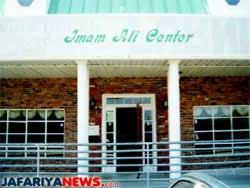
VIRGINIA, United States: To commemorate the matchless sacrifices
presented by Sibte Rasol Imam Hussein (AS) along with his 72 faithful
companions in the plain of Karbala some 1,400 years ago to defend
Islam and Shariah and save high human values, Hussaini mourning
gatherings wee held across the United States.
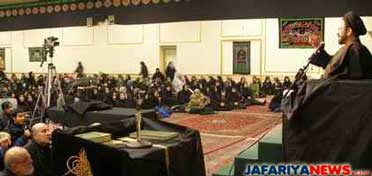
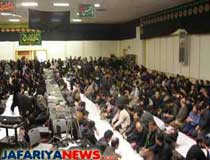
10-day majalis al-Hussaini (in English, Urdu, Persian and Arabic)
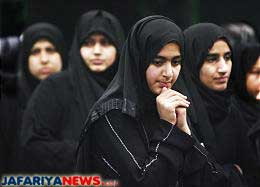
were held at Imam Ali Center in Virginia for men and women in separate
halls.
These majalis were attended by mourners belonging to different
nationalities i.e. Iraqi, Kuwaiti, Bahraini, Omani, Saudi, Lebanese,
Syrian, Iranian, Jordanian, Palestinian, Moroccan, Yemeni, Pakistani,
Indian, Afghani, African and American.
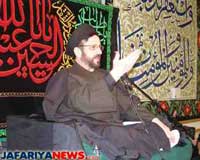
Arabic majalis were addressed by Sheikh Ali Abo-Hasan Ar-Ramithi
while Mostafa Al-Hayeri, Hussain Ash-Shahrestani, Ali Shalal, Abo-Muhammad
Al-Assadi, Abo Ali Al-Jaburi and Abo-Momal As-Saudi.
Sheikh Makki Al-Hayeri addressed majalis in Persian while Sheikh Abul
Jalil An-Navi in English. Urdu majalis were addressed and recited by
Sheikh Hasan Redha Al-Ghadiri, Matlob Zaidi, Najam Redhvi, Khorram
Redha, Hammad Redha and Ajvad Naqwi.
Sofratol Ita’am (table) was also served.
On Ashura, Azao Tatbeer (cutting heads with swords to cause the
blood to come out to signify grief on Imam Hussein martyrdom) was also
held.
In Washington, Islamic Education Center organized Hussaini mourning to
pay homage to the Karbala Martyrs. Ziarat Ashura was daily recited.
Hojjatol-Islam Sayed Muhammad Ali Gharvi, Sayed Aqayi and Mir Baqeri
addressed.
The Hussaini mourners gathered daily during first 13 days of Muharram
at the Ar-Rasool Islamic Center in South Salt Lake.
In Utah hundreds gathered at the Ar-Rasool mosque. The walls were
draped in black and adorned with posters listing the names of some of
those who were martyred at Karbala. The mourners listened to elegiac
poetry and orations designed to take them back in time. For 13 nights
they gathered, grieving more loudly as the nights progressed. On
Ashoura, which was Tuesday, they spent the day and the evening at the
mosque.
Each night began in prayer. Dinner followed. As they always do, the
men and boys sat separately from the women and girls. The toddlers
trotted back and forth between the two groups — playing in their
mothers' laps, being kissed by their fathers, being offered treats or
affection or correction by other adults.
The Ar-Rasool mosque has many members who were born in Iraq but also
members from Iran, Pakistan, India, Egypt, Syria, Jordan, Africa, the
United States and Latin America. In spite of their different
backgrounds they call each other "sister" and "brother".
The scholar from Los Angeles Mohammad Falah Alattar spoke in English
as well as Arabic.