|
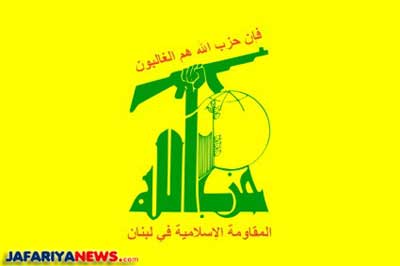
Nasrallah’s Hezbollah thrusts Lebanon Shiites onto leading edge
By: Karim Tellawi
BEIRUT, Lebanon: Much of Lebanon's Shiite community praises
Hezbollah for bringing them out of the shadows and into the political
limelight.
Maha, a Shiite resident of southern Lebanon, sums up her community's
newfound pride thanks to Hezbollah: "Before we were nothing, but now
we can walk with our heads held high."
Ahead of Sunday's key legislative vote, which pits a Hezbollah-led
alliance against the current parliamentary majority, many residents of
Lebanon's south swear by the group's charismatic chief Hassan
Nasrallah.
"Of course I will vote for Hezbollah," Maha said in her shoeshop in
the southern town of Naqura near the Israeli border. "It has made us
proud as Shiites, as residents of the south, and as Lebanese."
After the withdrawal of Israeli troops from south Lebanon in 2000
following a 22-year presence, the Shiite party fought a devastating
war with Israel in 2006 and emerged as a major powerbroker in Lebanon.
"We support the resistance 100 percent," said Ali Attieh, 48, as he
walked through the market in Qana village. "Hezbollah defended our
territory and created a balance of terror with Israel."
Israel estimates that Hezbollah has about 42,000 missiles which can
reach its territory.
"If Nasrallah ever lays down their arms, he will be a traitor in the
eyes of the Shiites," said Hussein, a carpenter from the village of
Siddiqin.
The party's arsenal lies at the heart of Lebanon's national dialogue,
which groups rival political leaders in an attempt to find agreement
on Hezbollah's arms and on a unified national defence strategy.
Lebanon's current majority insists that the state alone should have
weapons.
Most of those interviewed by AFP said Hezbollah had proved a viable
alternative to the state not only in terms of defence, but also in
terms of social welfare.
Like many political and religious movements in Lebanon, Hezbollah runs
a network of schools, hospitals and charity associations that has
taken the place of state-run services and facilities.
"Hezbollah is more useful than the state," said Ali, another resident
of Qana. "If you're sick and you need help, the party helps you get
admitted to hospital."
Shiite areas in Lebanon are relatively impoverished and rely heavily
on remittances from the Lebanese diaspora in Africa and elsewhere.
In addition to being a resistance movement and social welfare network,
Hezbollah has secured Shiites a key position in Lebanon's complex
political balance, upholding a mission launched by Imam Mussa Sadr in
the 1970s.
Sadr, who founded the Amal movement now led by parliament speaker
Nabih Berri, vanished without trace in Libya almost 30 years ago. The
cleric is still regarded by the Lebanese Shiite community as a key
spiritual guide.
"The Shiites were not a structured community," said Boutros Labaki, a
Lebanese historian and economist.
"The community started by Mussa Sadr gained momentum with the birth of
Hezbollah and strategic support from Iran and Syria."
Hussein Bitar, a bank manager in the coastal city of Tyre, said the
Shiites had "suffered from the political monopoly" of Lebanon's
Maronite Christians and Sunni Muslims before the rise of Sadr and then
Hezbollah.
Hezbollah was founded in 1982 and entered government for the first
time in 2005.
|
|
 |
| |
"Knowledge is
better than wealth because it protects you while you have to
guard wealth. it decreases if you keep on spending it but the
more you make use of knowledge ,the more it increases . what you
get through wealth disappears as soon as wealth disappears but
what you achieve through knowledge will remain even after you."MORE
..

|
|
|
|
|
|
|