Nabatieh or Nabatiyeh, is the principal town of the Nabatieh
Governorate, in southern Lebanon. It is the main city in the Jabal
Amel area and the chief center for both the mohafazat, or
governorate, and the kaza, or canton both also called Nabatieh.
Nabatieh is an important town both economically and culturally.
The inhabitants of Nabatieh are predominantly Shi'a Muslims, with a
significant minority of Greek Catholics. The Nabatieh district has
three representatives in the Lebanese government, all belonging to
the Shi'a religion, in accordance with Lebanon's congressional
system.
|
First Husseinia was established in Lebanon by the grandfather of current imam of Nabatieh, Sheikh Abdul Hussein al-Sadiq in 1909. |
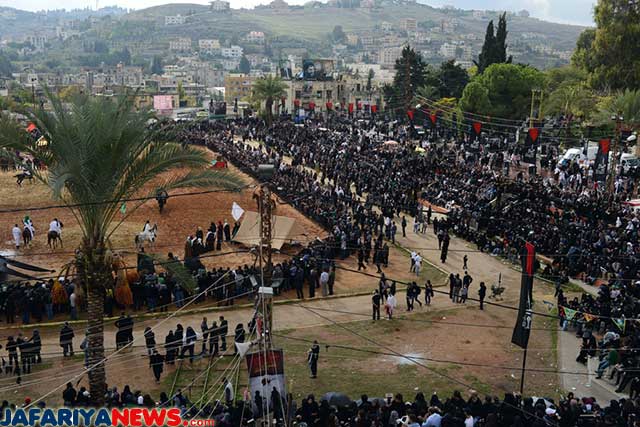
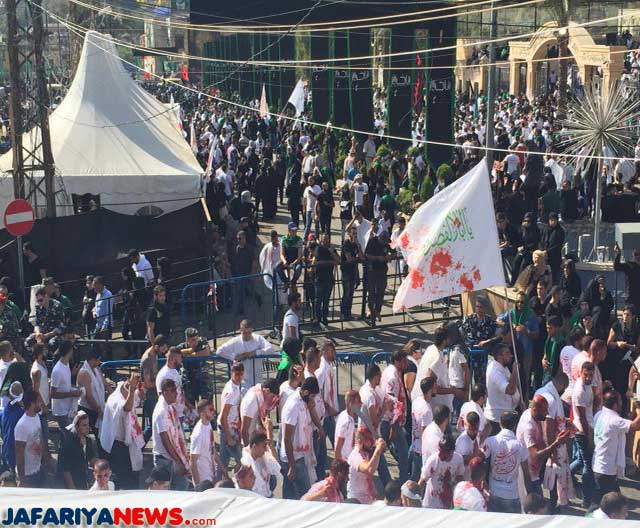
Each year, the Nabatiyeh attracts hundreds of Shiites who mark the
commemoration of the Battle of Karbala when Imam Hussein ibn Ali,
the dearest grandson of Holy Prophet Muhammad (PBUH), was martyred
by the forces of the second Umayyad caliph Yazid I at Karbala, Iraq.
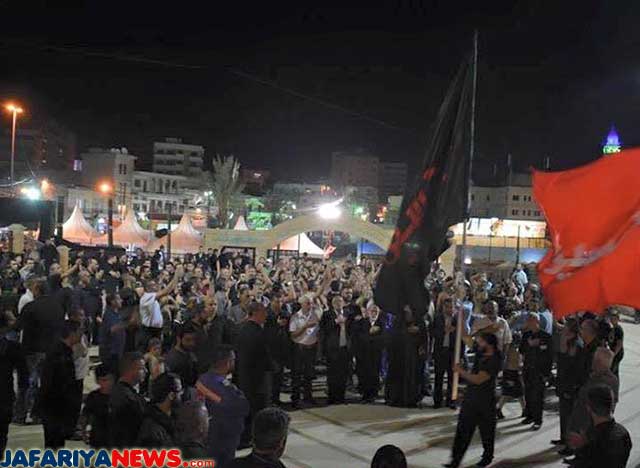
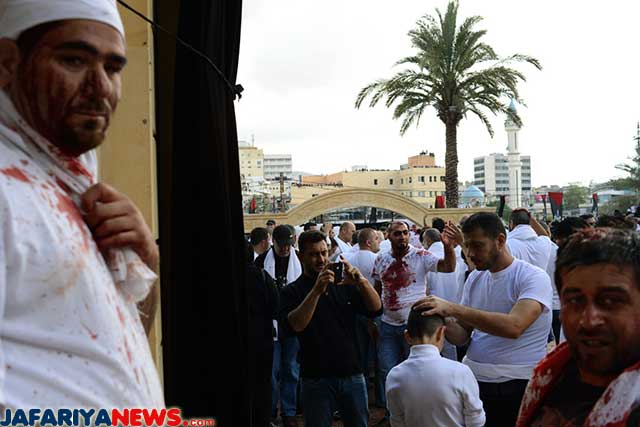
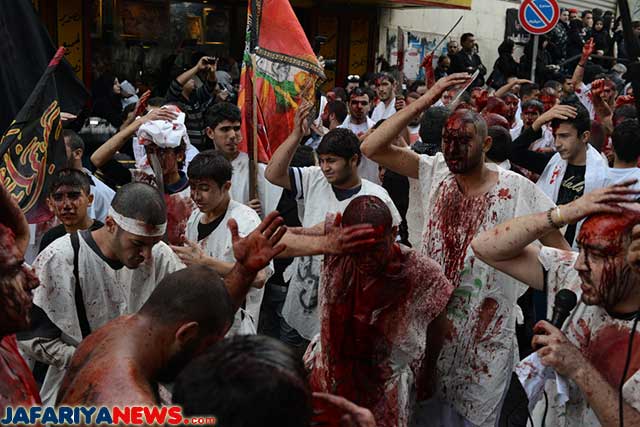
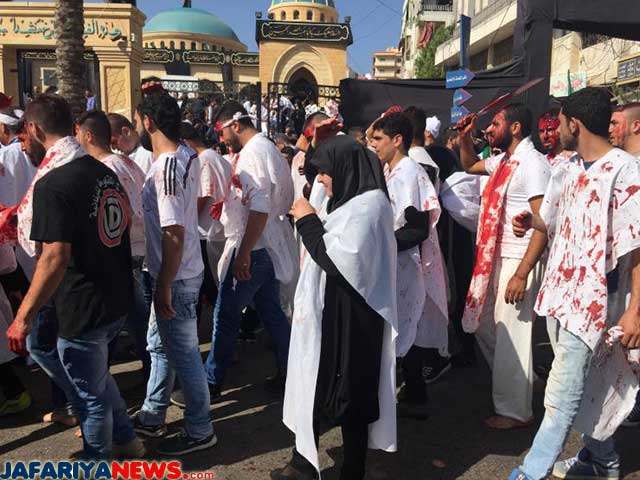
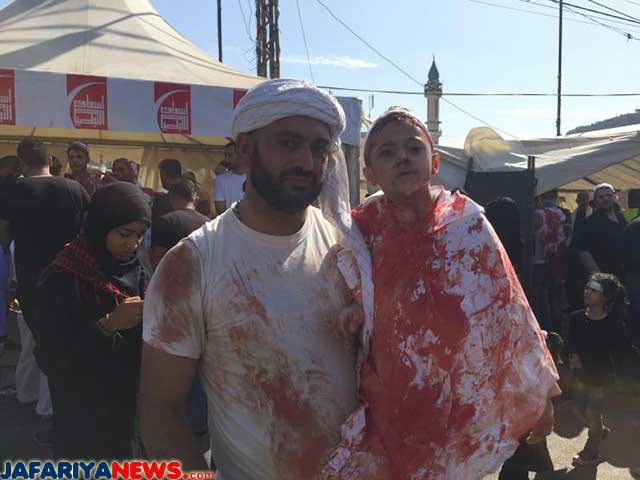
Blood flows in Nabatiyeh during the procession that takes place in
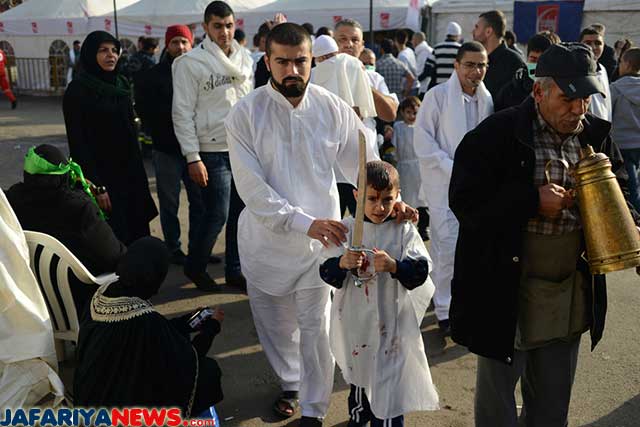
the central square of the town. Men, teenagers and even little boys
and a few women make a pledge to perform the bloodletting ritual,
Tatbir, making an incision with a sword into their foreheads and
letting the blood flow on their faces in a sign of mourning. In
order to keep the blood flowing, they hit the incision with the flat
of the sword, chanting Haidar! Haidar! (Lion!, Lion!), the nickname
of Imam Ali, the son-in-law and cousin of Holy Prophet Muhammad (PBUH).
The practice is symbolic, to express regret that the mourners are
not able to fight alongside Imam Hussein (as) 1,335 years ago.
|
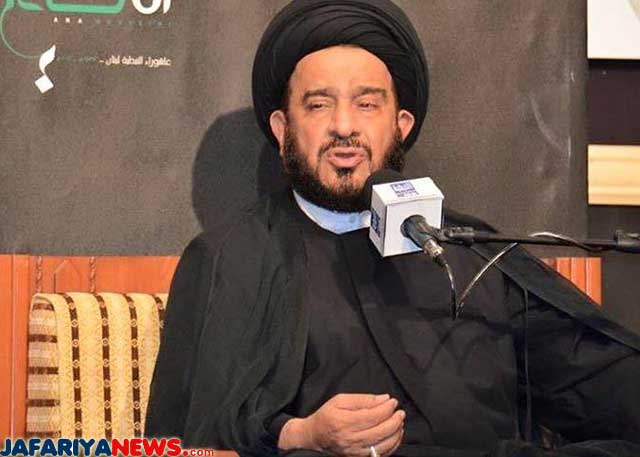
Sheikh Abdel Hussein Sadiq cannot be convinced to give up the Tatbir because he says it is not a sin to shed blood for one day a year to commemorate Dearest grandson of Holy Prophet, Imam Hussein (as). |
Some of the elders believe the city embraced its identity since the
first Husseinia was established in Lebanon by the grandfather of
current imam of Nabatieh, Sheikh Abdul Hussein al-Sadiq in 1909
after studying Sharia from the holy city of Najaf in Iraq. At the
time, Lebanese Shiites weren’t very permissive concerning Ottoman
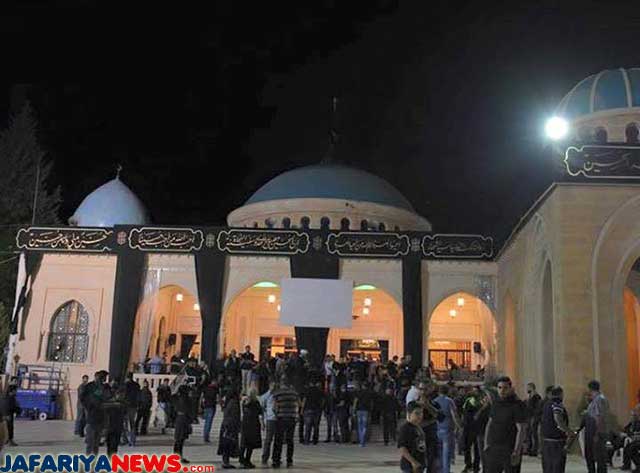
rule. The small Hussainiyah grew and turned into the religious
edifice that overlooks the main public square in Nabatiyeh, called
Ashura Square.
During Ottomon Empire the ritual was practiced in secret, at home.
Also there was a commemoration in the Hay al-Serail Mosque, but it
was also all very much in secret. An Iranian doctor Bahij Mirza,
when moved to the town in early 20th century, he also promoted the
Tatbir a lot. His house still stands in the city today. Mirza moved
to Nabatieh just after the ruling Iranian Pahlavi family convinced
the Ottomans to allow public Ashura ceremonies for residents of the
town. After the WWI and the fall of the Ottoman Empire, the rituals
of Imam Hussein (as) mourning became symbol of Nabatiyeh.
According to residents, Nabatiyeh Imam of Sheikh Abdel Hussein Sadiq
cannot be convinced to give up the Tatbir because he says it is not
a sin to shed blood for one day a year to commemorate Dearest
grandson of Holy Prophet, Imam Hussein (as). The sheikh enjoys great
popularity in Nabatiyeh.
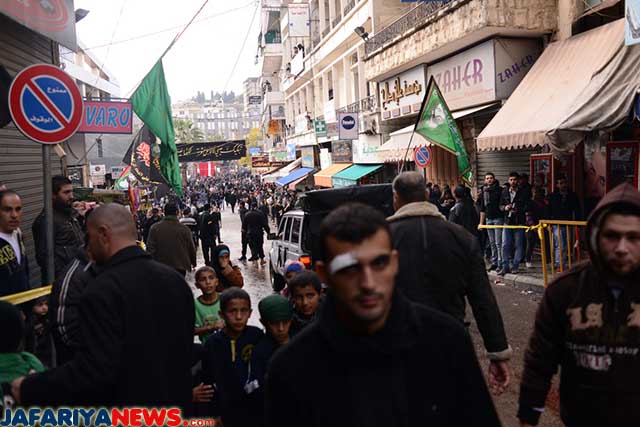
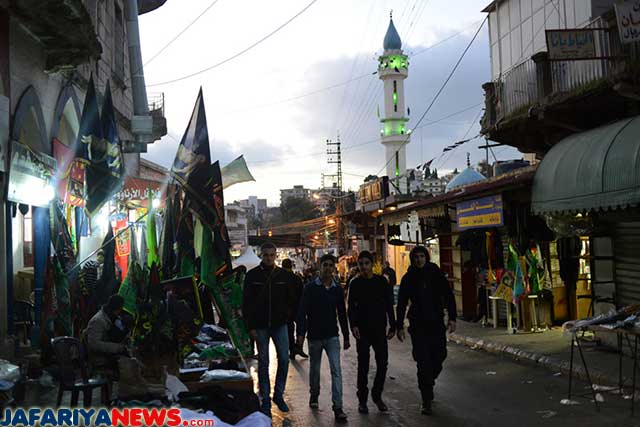
As the Hijri month of Muharram approaches, the sound of Ashura
laments and chants become part of the daily ritual in the streets.
Some shops and stands open up temporarily to sell Ashura supplies.
It is not merely the people, the political parties, and the local
committees that participate in this setting, the municipality and
some official institutions use their authority to raise banners in
public spaces.
On Ashura, black mantles are hung from balconies, and banners
reading "O Hussein" are draped from roofs in Nabatiyeh. Various
commercial establishments also express the Karbala spirit: Shops are
covered with black banners, so were gas stations and vegetable
stands, which display sayings uttered by Imam Hussein (as) at the
Battle of Karbala in 680 AD.