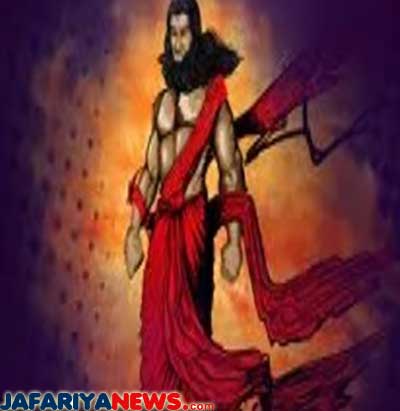
The participation of the Mohyals Brahmins and more precisely that
of a Dutt family living in Arabia at that time, in the holy battle
of Karbala, is a fact of the history. They are now spread across
Sindh in Pakistan, Maharashtra, Rajasthan, Delhi and other parts of
India, Pakistan and Arabia. Rahib Sidh Datt, a Hindu Saraswat
Brahmin (a potentate of Datt sect ) had close relation with the
family of Muhammad (PBUH) & was was a highly respected figure in
Arabia. He sacrificed his seven sons in the war of karbala for Imam
al-Hussain (as), grandson of Holy Prophet (PBUH).
Dutt or Datt:
They are Mohyal Brahmin clan from Punjab and Haryana. Dutts are the
only warrior clan among the Brahmins. Majority of Dutts are Hindus
but many follow other religions as well. They are 1 of the 7 clans
of Mohyals who are Sarawat the 6 other clans are Bhimwal, Bali, Lau,
Vaid, Chhibber and Mohan.
Gotra – Bhardwaj
They are descent from Rishi Bharadwaj, hence they derive their Gotra
from his name. Dutts/Datts were classified as Martial Race in the
British rule in India.
According to Pune’s hussaini Brahmins Punjabi immigrants, their
ancestors fought alongside Imam Hussein in the battle of Karbala
(now in modern Iraq).
Their community still observe Muharram with Muslims to remember the
sacrifices of their ancestors who fought with Imam Hussein in the
Battle of Karbala.As per the Punjabi Brahmin immigrants, since the
Karbala battle in 680 AD, this community of around 500-member has
taken the prefix of ‘hussaini’, and call themselves the Hussaini
Brahmins.
As per the community members of Hussaini Brahmins 1 of their
ancestors named Rahab dutt travelled all the way to Arabia to help
his friend Imam Hussain(as).
According to some traditions,
The Imam, seeing Rahab dutt’s love for him, conferred upon him the
title of Sultan and told him to return to India.
Rahab dutt came back and the community to which he belonged adopted
the name, Hussaini Brahmins, signifying his close bond with Imam
Hussain and the fact that they were Hindu Brahmins.
The Hussaini Brahmins, also known as Mohiyals came here from distant
Punjab centuries ago and settled down to a quiet existence, most of
them continuing the warrior tradition of their ancestors and joining
the Army.
Colonel Ramsarup Bakshi (retd), a member of this community, told
Pune Mirror that there certainly is an “element of surprise” when he
introduces himself as a Hussaini Brahmin. “The employees in the
factory I run now were taken aback when I told them about my
community. ‘Asapan asta ka?’ (Is it so?) They exclaimed.” Bakshi
said his community remains proud of its ancestral links to Imam
Hussain, and they recall this bond on Ashura with great reverence.
“We are a very, very small community in Pune, but this single piece
of history is of seminal significance in our lives and binds us
together, both Hindus and Muslims.”
Most importantly, Bakshi emphasised, “We symbolise the centuries-old
bond shared by Hindus and Muslims in this part of the world.” Noted
lawyer-activist Netraprakash Bhog, also a Hussaini Brahmin, said he
is proud of his community. “Hussaini Brahmins hold a special place
in the history of Islam. Our ancestors fought alongside Imam Hussain
for the cause of truth and justice. We still cherish those
sacrifices made by our community.”
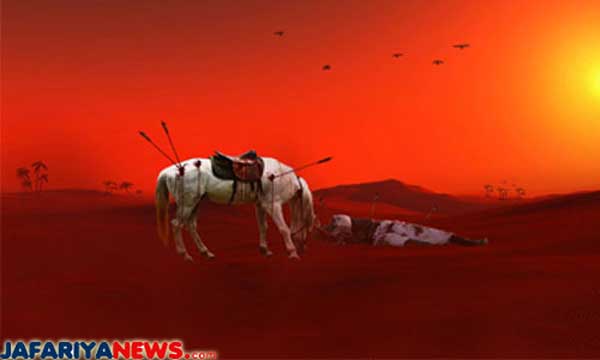
Sacrifice of Rahib Datt for Imam Hussain(as)
Imam Hussain as was slaughtered in the desert on the 10th day of
Muharram (Day of Ashura) along with his band of disciples in a
bloody battle.
Rahib datt chased the murderers as they ran with the severed head of
Hussein, up to Kufa. He retrieved the holy man’s head, washed it
reverentially and then carried it to Damascus. According to legend,
he was overtaken by Yazid’s men during his overnight shelter on the
way. They demanded Hussain’s head from him: Rahab executed the head
of one of his sons and offered to them. They shouted that it was not
the Hussain’s head, then he beheaded his second son and they again
yelled that it was not his. In this way Rahab executed the heads of
his seven sons but did not part with the head of Imam Hussain.
The valiant dutts and shia disciples of Imam Hussein did not lay
down their arms till they saw the end of Yazid who could rule just
for little time.
The intrepid Datts rallied round Amir Mukhtar, the chief of the
partisans of Imam Hussain, fought with extraordinary heroism and
captured and razed the fort of Koofa, seat of Yazid’s governor,
Obaidullah, the Butcher. After scoring a resounding victory on the
battlefield, they beat the drums and yelled out that they had
avenged the innocent blood of Hussain shed at Karbala.
It is also significant to note that even before the Karbala
incident, Hazrat Ali had entrusted the public exchequer to the
regiment of the valiant Datts, at the time of the Battle of Camels
fought near Basra.
The above provides impeccable evidence about the pragmatic role
played by the Datt Mohyals in the catastrophe of Karbala.
Later on, Datts (the followers of Rahib), who were mostly Hindu
Saraswat Brahmins. Rahib was overwhelmed with grief due to the
slaughter of his 7 sons, migrated to Afghanistan via Iran and
Turkistan.
The datts left Arabia in 728 AD and returned to their motherland to
settle at Dina Nagar, District Sialkot (vide Bandobast Report of
Gujarat by Mirza Azam Beg page 422 and folk songs) and some drifted
to as far as the holy Pushkar in Rajasthan.
Later descendants of Rahib had many clans (Kabilas) in modern day
Afghanistan and NWFP. The clans were called Mohdaa. To this day, a
group of Brahmins called Hussaini Brahmins claim ancestry from Rihab
Sidh Datt and participate in Muharram celebrations in India.
After returning to India the descendants of Rahib Datt received
grand welcome by the native Mohyals. They eventually settled near
Nankana Sahib in the district of Sheikhupura in present-day
Pakistan.
Many direct descendants of Rahib Dutt use last names such as Dutt,
Datt, Sharma, Bharadwaj.
Pir Wahun was known for his knack of consistently winning the games.
According to a bet fixed by him, the loser would either pay the
price with his head or embrace Islam. In this way, he converted a
large number of Hindus to the Muslim faith until he met his match in
Shiv Datt. Shiv Datt challenged the Pir to a game of chess and
defeated him three times in a row, thereby claiming the heads of his
wife and two sons as per the stakes. However out of sheer
generousness, Shiv Datt pardoned their life. When Wahun came to know
that one of the ancestors of Shiv Datt had sacrificed his 7 sons for
the sake of Muhammad in the battle of Karbala, he took a solemn vow
that in the future he would never convert any Hindu by coercion to
Islam. It was on this occasion that the Pir echoed the famous words:
Wah Datt Sultan, Hindu ka Dharam Musalman ka Iman Adha Hindu Adha
Musalman (Hail, O King Datt for Thou are endowed with the Dharma of
the Hindu and the Iman of the Muslim Half Hindu, half Muslim).
2nd Story
According to some traditions, when it became clear that Yazid was
adamant on killing the Imam, the Imam’s son Ali ibn Hussain rushed
off a letter to Chandragupta asking him for help against Yazid. When
Chandragupta received the letter, he dispatched a large army to Iraq
to assist the Imam. By the time they arrived, however, the Imam had
been slain. In the town of Kufa, in present-day Iraq, they met with
one Mukhtar Saqaffi, a disciple of the Imam, who arranged for them
to stay in a special part of the town, which even today is known by
the name of Dair-i-Hindiya or ‘the Indian quarter’.
Some Dutt Brahmins, under the leadership of one Bhurya Dutt, got
together with Mukhtar Saqafi to avenge the death of the Imam. They
stayed behind in Kufa, while the rest returned to India. Here they
built up a community of their own, calling themselves Hussaini
Brahmins, keeping alive the memory of their links with the Imam.
3rd Story
According to Jang Nama, written by Ahmed Punjabi, pages 175-176, it
was ordained on the Shias to recite the name of Rahab in their daily
prayer. At the time to the Karbala, fourteen hundred Hussaini
Brahmins lived in Baghdad alone.
4th Story
Interestingly, in the Preface of his famous historical novel, titled
Karbala, published in 1924 from Lucknow, Munshi Prem Chand has
stated that the Hindus, who fought and sacrificed their lives in the
holy war of Karbala, are believed to be the descendants of
Ashvathama. This clearly establishes their link with the Datts who
consider Ashvathama as an ancestor of their clan.
5th Story
An ancestor of Rahab named Sidh Viyog Datt assumed the title of
Sultan and made Arabia (old name Iraq) his home. He was a tough and
tenacious fighter. He was also known as Mir Sidhani. He was a
worshipper of Brahma. He was the son of the stalwart Sidh Jhoja
(Vaj) who was a savant and saint and lived in Arabia (Iraq) around
600 AD.
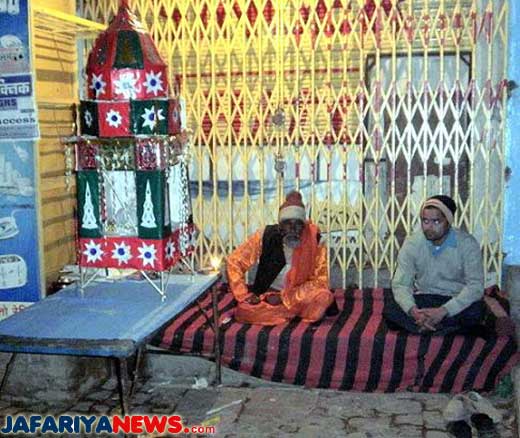
The Hussaini followers honoured the Datts with the name of
Hussaini Brahmin and treated them with great reverence in grateful
recognition of the supreme sacrifices made by them in the war of
Karbala. According to Jang Nama, written by Ahmed Punjabi, pages
175-176, it was ordained on the Shias to recite the name of Rahab in
their daily prayer. At the time to the Karbala, fourteen hundred
Hussaini Brahmins lived in Baghdad alone.
------------------------
(Article was prepared with the help of Websites hindu,
Kasmir Only, Wikipedia and various books mentioned)