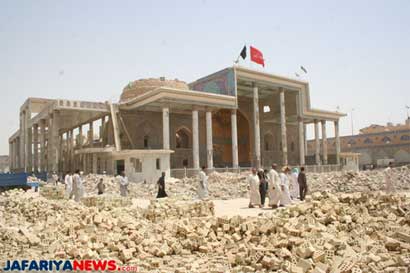
HOLY SAMARRA, Iraq: Marking the martyrdom anniversary of Al-Imam
Ali b. Muhammad An-Naqi Al-Hadi (peace be on him), tenth infallible
descendant of holy Prophet Muhammad (peace be on him and his holy
progeny), massive caravans from across the country particularly from
Najaf gathered at the holy Al-Askariya shrine in Samarra on Rajab 3.
|
"The vows of allegiance won’t be broken," they chanted. "Hadi, we haven't
forgotten the day when your shrine was demolished."
|
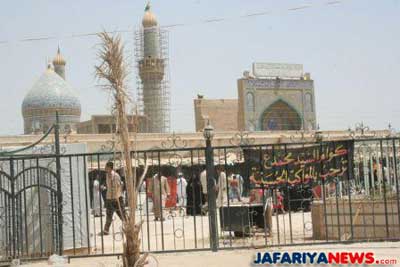
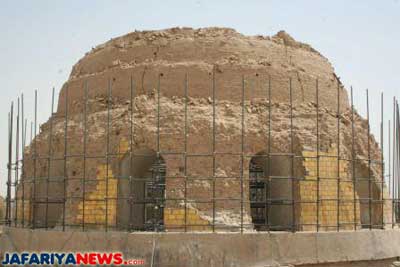
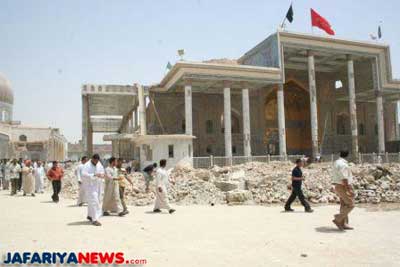
A terror bombing on Feb. 22, 2006, destroyed shrine’s famous golden
dome and another bombing on June 13, 2007, collapsed the two minarets.
With security improving, more than 100 buses carrying mourners from
the southern holy city of Najaf made their way to Samarra to
commemorate the sad occasion.
Each bus had room for 50 passengers, in addition to those who stood in
the aisles for the five-hour journey, so eager were they to
participate in the mourning.
A civil servant Abdul-Kareem Ali, one of the mourners traveling to
Samarra, said: "We haven't witnessed such a procession for a long time
… The former regime banned them, and then they were banned by the
terrorists."
|
"When we saw the shrine for the first time, we all started weeping and
slapping our heads in shock."
|
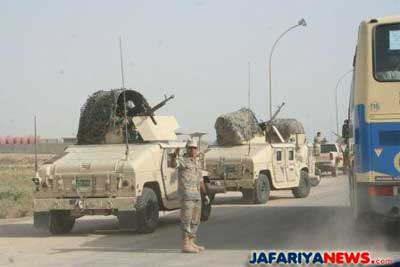
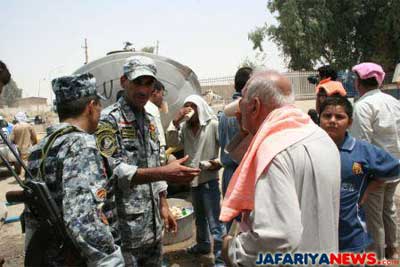
The route was secured by the Iraqi army, National Police and Sunni
tribesmen hired by the U.S. military to help protect major roads.
Traffic police on motorcycles led the procession through Baghdad,
where roads were sealed off for protection.
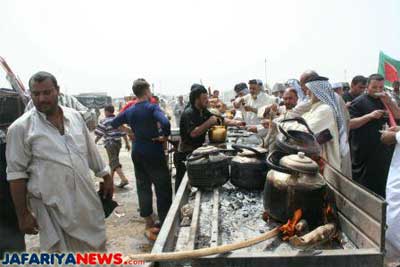
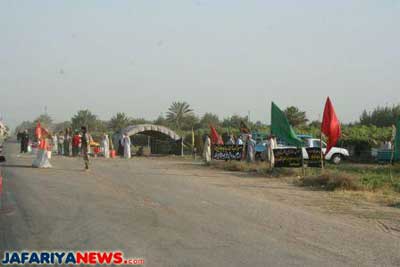
In Balad, 50 miles north of the capital, dozens of people joined the
procession on foot, many of them women and children. Others set up
tents by the side of the road to offer the pilgrims food and water.
Ten miles farther north, hundreds of cars and buses were crowded at
the entrance to Samarra, waiting for permission to enter the city.
"I cried when we arrived," said a bus driver Mohammed Hadrawi. "I was
looking for the dome and minarets, but I didn't see them.... We used
to see them from a long distance.... Now the city is in ruins."
|
"The devastation is more than we had seen in the [TV] footage,"
|
The vehicle pulled up in front of the police directorate to be
searched, and from there the mourners continued on foot.
Policeman Ibrahim Bazi kept an eye on the throngs from behind the
wheel of his car.
"We haven't slept for four days because of the preparations for this
pilgrimage," he said. The terrorists in Iraq "banned pilgrims from
coming and prevented city residents from receiving them from 2004. Now
we are happy, because life is returning to normal. Even we [policemen]
... were banned from entering under the reign of those bad people. We
will return, and the golden shrine will shine in the skies of Samarra."
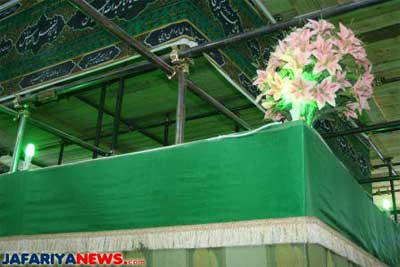
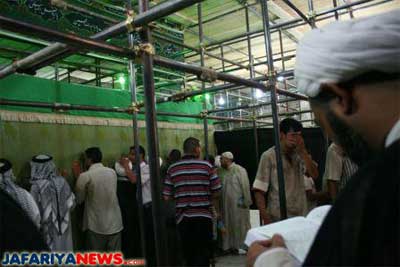
The streets leading to the shrine were lined with concrete
barricades. It felt like walking through a maze.
As the Najaf caravan approached the shrine, pilgrims were reciting
elegies commemorating the imam’s martyrdom and beating their chests in
mourning.
"The vows of allegiance won’t be broken," they chanted. "Hadi, we
haven't forgotten the day when your shrine was demolished."
"When we saw the shrine for the first time, we all started weeping and
slapping our heads in shock."
"The devastation is more than we had seen in the [TV] footage," said
Muneer Ali Fadhl, a photographer from Najaf. "The sun’s rays beamed
onto the floor through the broken dome.... It's a disaster."
Reconstruction began at the end of last year, but it will take years
to complete.
An engineer told the caravan that stone blocs were being manufactured
that will be exact replicas of those used to build the shrine. Experts
are also studying the Qoranic verses on the walls in order to complete
the missing parts.
When the mourners left the shrine, city residents opened their doors
to receive them and offer them refreshments.
"It's a joyful scene to see the pilgrims coming back to our city,"
said Hafith Salman, a Samarra resident who makes a living driving a
pickup truck. "We depend on religious tourism like the other holy
cities. What the criminals did here has turned the city into a
miserable one."